Types of Construction Projects: Residential, Commercial and Infrastructure Explained.
Introduction
Construction projects play a crucial role in shaping the physical environment where people live, work, and travel. From building homes and office complexes to developing highways and bridges, construction activities support economic growth and improve living standards. Understanding the different types of construction projects helps professionals, students, and stakeholders identify project requirements, planning processes, and resource needs.
Types of Construction Projects
Each type of construction project has unique characteristics, design considerations, and execution methods. Residential projects focus on housing needs, commercial projects support business activities, and infrastructure projects provide essential public facilities. Knowing the differences between these project types helps in better planning, budgeting, and management. This article explains the main types of construction projects, their importance, processes, and best practices in simple and clear language.
What is Types of Construction Projects
Types of construction projects refer to the classification of construction activities based on their purpose, usage, scale, and design requirements. These projects involve planning, designing, building, and maintaining structures that serve different functions in society.
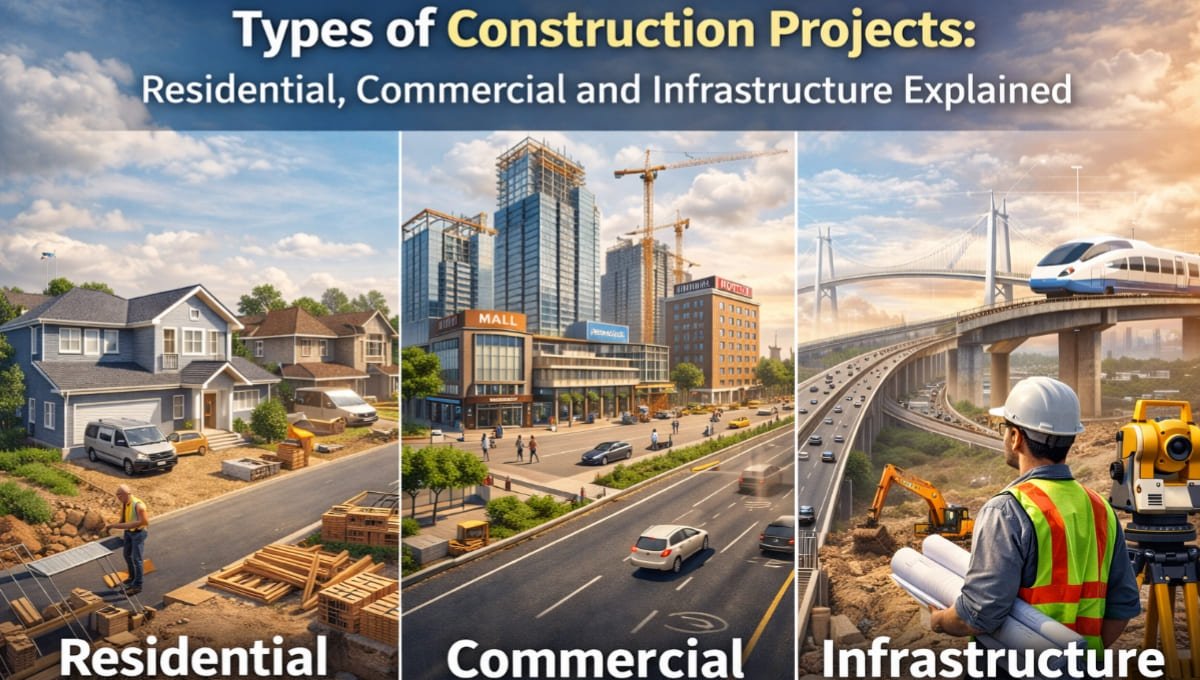
Construction projects are generally divided into three major categories: residential, commercial, and infrastructure projects. Each category requires specific materials, engineering techniques, regulations, and management approaches to ensure safety, functionality, and sustainability.
Types / Components / Key Elements

1. Residential Construction Projects
Residential construction projects involve building structures where people live. These projects are designed to provide safe, comfortable, and functional living spaces.
Examples include:
- Individual houses and villas
- Apartments and residential complexes
- Townhouses and duplex homes
- Housing societies
Key elements include architectural design, plumbing systems, electrical installations, ventilation, and interior finishing. Residential projects typically focus on comfort, aesthetics, and cost efficiency.
2. Commercial Construction Projects
Commercial construction projects are designed to support business activities and services. These projects usually involve larger budgets, complex designs, and strict safety regulations.
Examples include:
- Office buildings
- Shopping malls
- Hotels and restaurants
- Hospitals and healthcare facilities
- Educational institutions
Commercial projects require advanced structural design, fire safety systems, parking facilities, and efficient space planning. The focus is on functionality, durability, and compliance with regulations.
3. Infrastructure Construction Projects
Infrastructure construction projects involve building essential public facilities that support transportation, utilities, and community services. These projects are usually large-scale and funded by governments or public-private partnerships.
Examples include:
- Roads and highways
- Bridges and tunnels
- Railways and airports
- Dams and water supply systems
- Power plants
Infrastructure projects require detailed planning, environmental assessments, and advanced engineering techniques to ensure long-term performance and safety.
Benefits / Importance / Uses
Understanding different types of construction projects is important for effective project planning and execution. Each type plays a unique role in supporting economic development and improving quality of life.
Residential projects provide safe housing and support urban development. Commercial projects create spaces for business operations, generate employment, and contribute to economic growth. Infrastructure projects improve transportation, communication, and access to essential services such as water and electricity.
Proper classification also helps engineers and project managers select suitable materials, technologies, and construction methods. It ensures efficient resource allocation and better risk management.
Process / Working / Step by Step Guide
Although each construction project type has specific requirements, the general process follows similar steps.
1. Project Planning
This stage involves identifying project objectives, conducting feasibility studies, and defining scope, budget, and timeline.
2. Design and Engineering
Architects and engineers prepare drawings, structural designs, and specifications based on project requirements.
3. Approval and Permits
Necessary approvals are obtained from local authorities to ensure compliance with regulations and safety standards.
4. Procurement
Materials, equipment, and contractors are selected and arranged for construction.
5. Construction Execution
The construction team performs site work, structural work, installations, and finishing activities while maintaining quality and safety standards.
6. Inspection and Handover
After completion, the project is inspected to ensure it meets design specifications before handing over to the owner or client.
Best Practices / Tips
Proper planning and detailed site investigation help avoid delays and cost overruns. Choosing the right construction method and materials improves project durability and efficiency.
Maintaining clear communication between stakeholders ensures smooth coordination and problem-solving. Following safety regulations and quality standards reduces risks and ensures compliance with legal requirements.
Using modern technologies such as project management software and Building Information Modeling (BIM) improves accuracy and project control. Regular monitoring and documentation help track progress and maintain quality.
Common Mistakes
One common mistake is inadequate project planning, which can lead to design changes, delays, and increased costs. Poor site investigation may result in structural issues or foundation problems.
Ignoring safety standards can increase the risk of accidents and legal issues. Lack of proper coordination between teams often causes errors and rework. Inaccurate cost estimation may lead to budget overruns.
Avoiding these mistakes requires proper planning, experienced supervision, and strict adherence to engineering practices.
Conclusion
Construction projects are essential for developing safe living spaces, supporting business operations, and providing public infrastructure. Residential, commercial, and infrastructure projects each serve different purposes and require specific planning, design, and execution approaches.
Understanding the types of construction projects helps professionals make informed decisions, select appropriate construction methods, and manage resources effectively. With proper planning, quality control, and adherence to safety standards, construction projects can deliver long-lasting benefits to society and support sustainable development.
FAQs
1. What are the main types of construction projects?
The main types are residential, commercial, and infrastructure construction projects.
2. What is the difference between residential and commercial construction?
Residential construction focuses on housing, while commercial construction focuses on buildings used for business activities.
3. Why are infrastructure projects important?
Infrastructure projects provide essential services such as transportation, water supply, and power, supporting economic development.
4. What is the first step in a construction project?
The first step is project planning, which includes feasibility study, scope definition, and budgeting.
5. Who manages construction projects?
Construction projects are managed by project managers, engineers, contractors, and other professionals.